UK insurance regulations require brokers to screen clients against government sanctions lists before selling policies. Names get checked against UK HMT, OFAC, EU watchlists, and others. It is a legal requirement, not optional.
But here is the reality: 99% of checks return no match. For brokers processing hundreds of quotes daily, sanctions checking felt like bureaucratic box-ticking. Important, yes. But also a workflow killer.
The existing process made it worse. Brokers had to navigate away from the quote journey, run checks in separate systems, then return to complete the sale. Some brokers ran checks after the sale by manually downloading government lists and matching data. Others used third-party tools that added clicks and context switching to every transaction.
My challenge was to make compliance invisible when it did not matter, and unmissable when it did.
I conducted interviews with two broker clients, speaking with seven stakeholders total. What I found was not one workflow, but two entirely different approaches to compliance.
The first broker was a small to mid-size operation. They used a third-party tool for point-of-quote checks, and every agent had full autonomy to override matches. Their priority was speed. Sanctions checks rarely flagged real issues, so they did not want the process slowing down sales.
The second broker was larger, processing up to 2,000 policies per day at full scale. They ran checks after sales using manual processes, with specialised compliance teams reviewing flagged clients. Their priority was auditability. When regulators came knocking, they needed clear records of what was checked, when, and by whom.
Despite different approaches, both brokers wanted the same thing: integration. They already had sanctions checking solutions. What they lacked was a system that worked within the quote journey rather than alongside it. They wanted compliance without context switching.
Three insights shaped my design:
First, sanctions checking needed to happen automatically during the quote flow, not as a separate step. Second, the system needed configurable strictness because different brokers had different risk tolerances. Third, match review needed to support both individual agent decisions and specialised compliance team workflows.
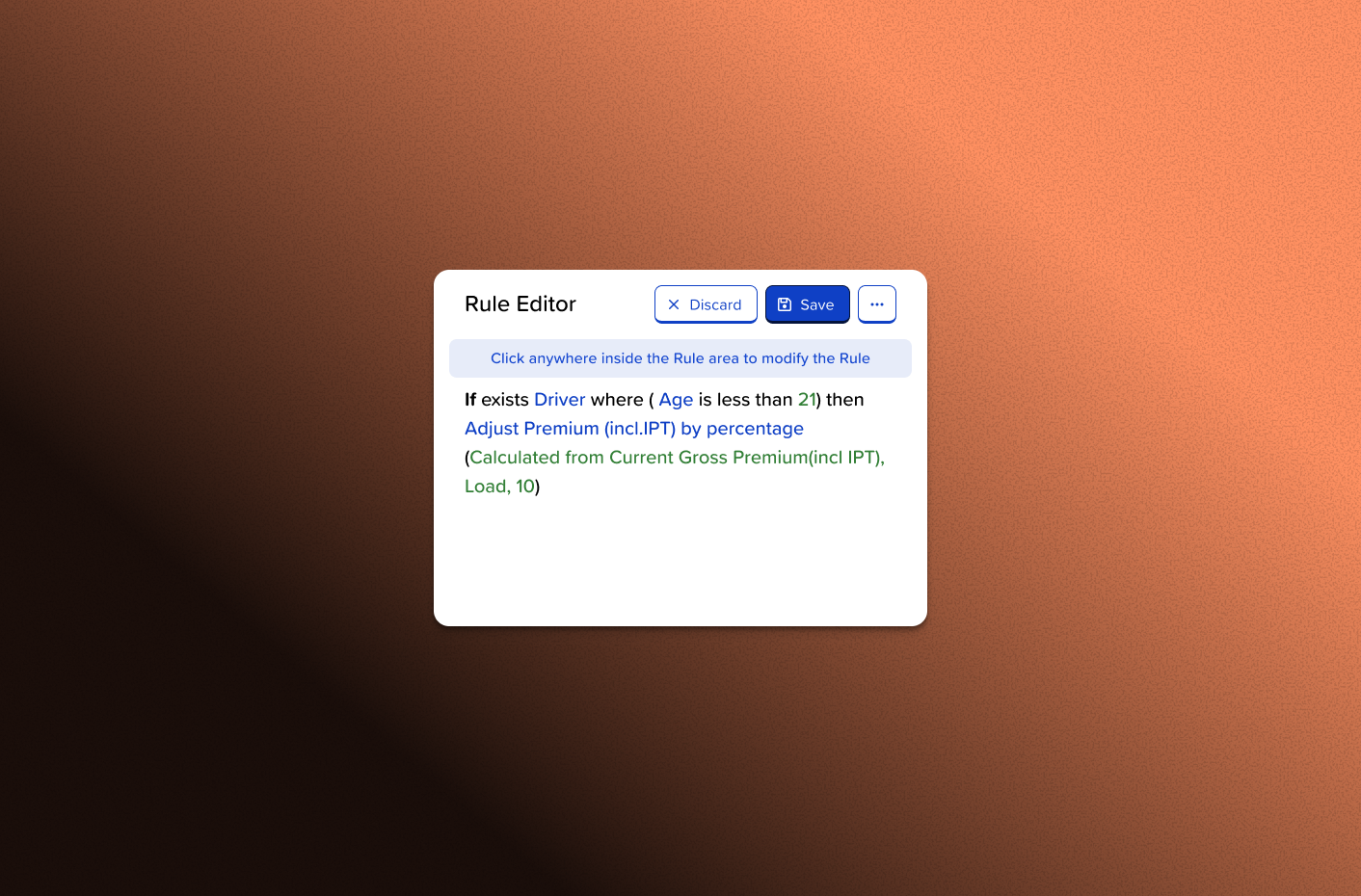
I designed a system with three layers: automatic screening during quote generation, configurable rules for how matches are handled, and a review interface for flagged cases.
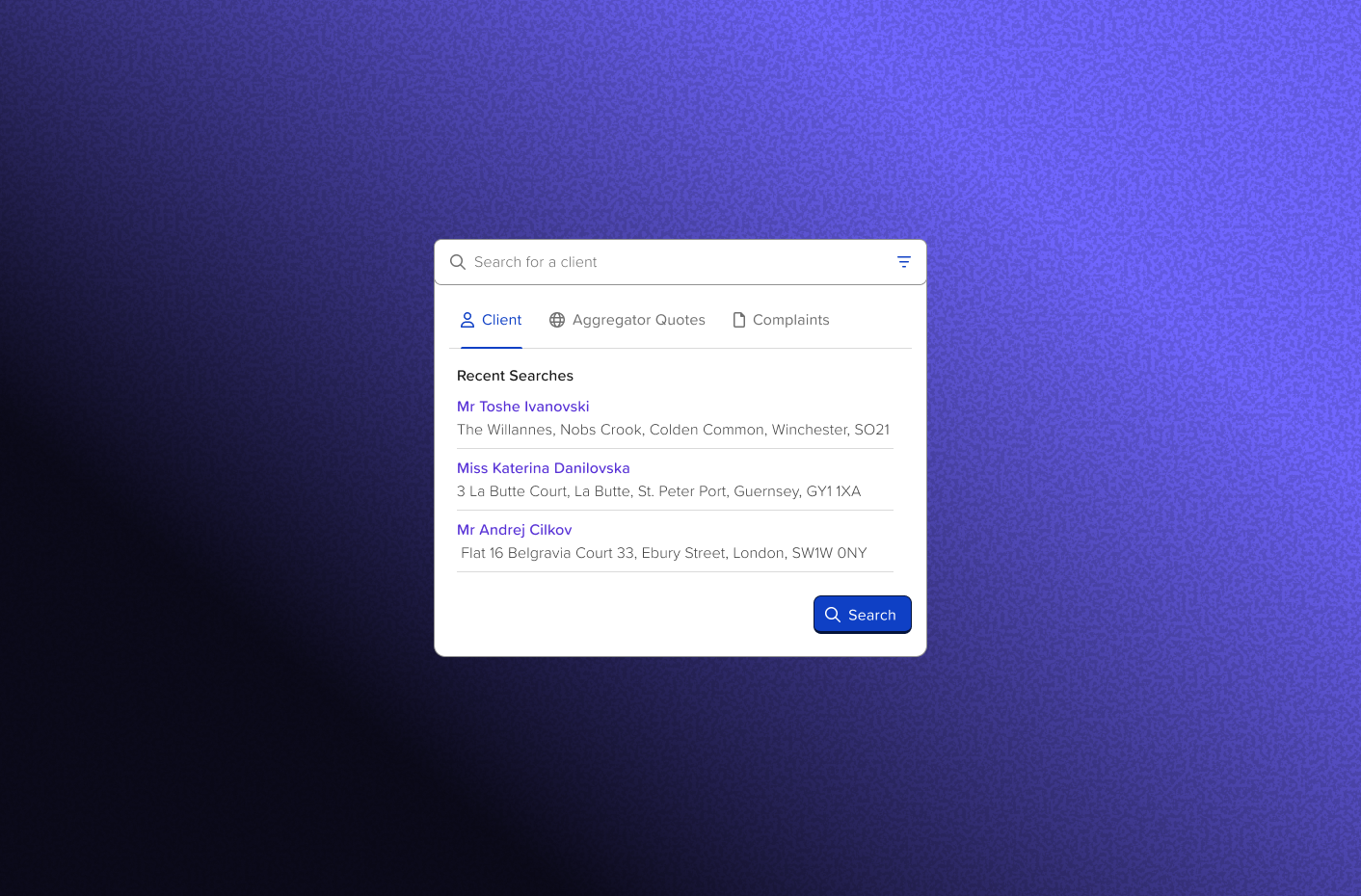
The automatic screening runs in the background. When a broker creates a quote, the system checks the client name against configured sanctions lists. If there is no match, nothing happens. The broker never sees the check. Compliance is invisible.
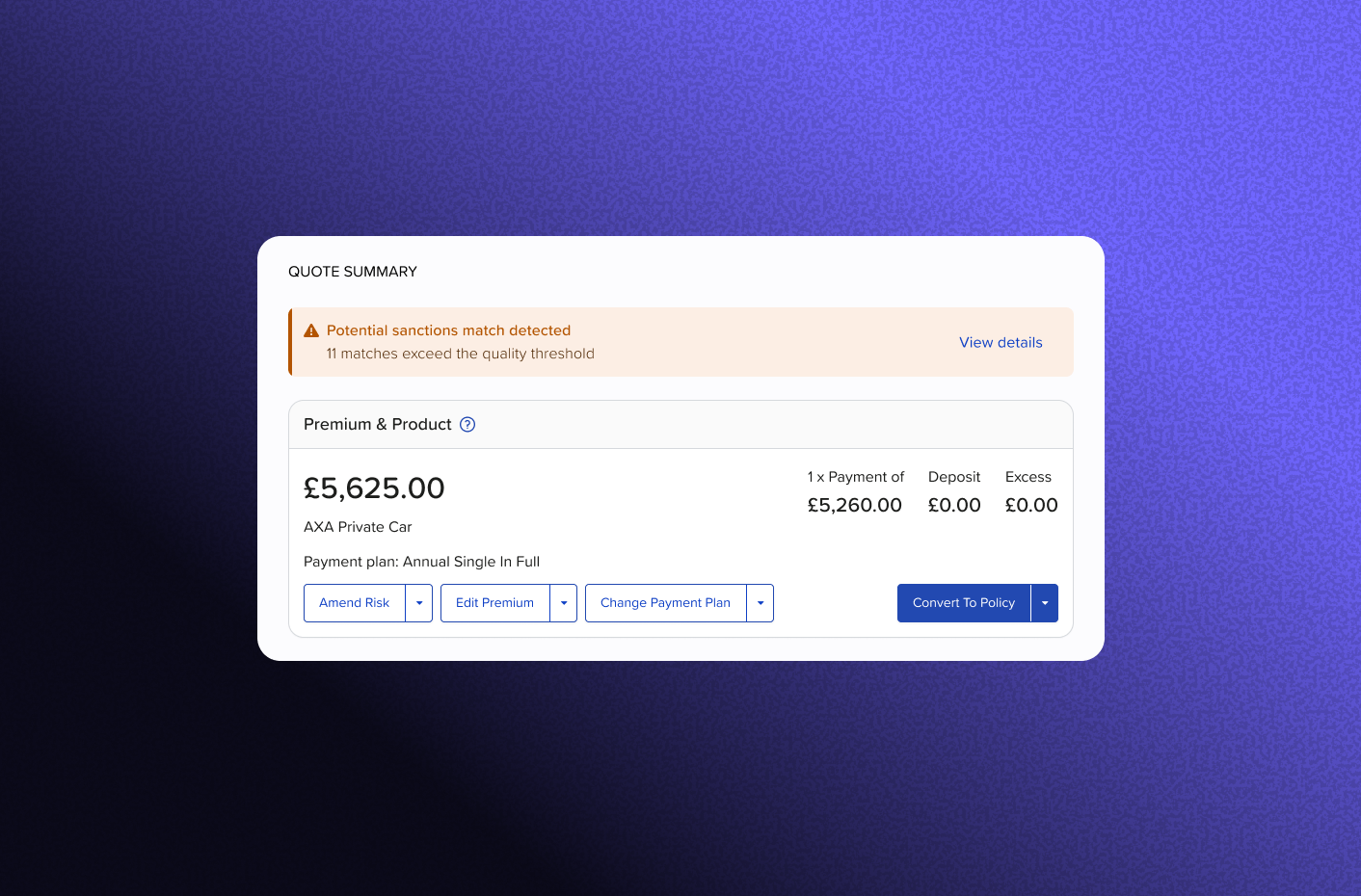
When there is a potential match, the system behaviour depends on the broker's configuration. For the small broker who wanted speed, the agent sees a notification and can review and override immediately. For the large broker who wanted auditability, the quote is held for compliance team review with full audit trails.
Compliance checking is now a base feature for all clients. The configurable approach meant we did not have to choose between the small broker's speed-first model and the large broker's compliance-first model. Both could configure the system to match their existing workflows.
The integration into the quote journey eliminated context switching entirely. Brokers no longer needed to navigate to separate systems or manually download government lists.
Make compliance invisible when possible. The 99% of checks that return no match should require zero effort from the user. Only surface the process when it matters.
Different users need different strictness, not different features. Both brokers needed the same core capability. The difference was configuration, not functionality. Building configurable strictness was more efficient than building two separate workflows.
Discovery with real stakeholders prevents assumptions. Without speaking to both broker types, I would have designed for one model and broken the other. Two interviews with seven stakeholders gave me the insight that shaped the entire architecture.